
Motor selection is one of the fundamental engineering decisions when configuring CNC equipment for woodworking production. Although the spindle performs the cutting operation, the drive system determines how accurately and efficiently machine movements are executed.
Servo motors and stepper motors each offer distinct operating characteristics, making them suitable for different manufacturing environments. As a supplier of woodworking production solutions, we help manufacturers evaluate motor systems according to machining requirements, production planning, and long-term operational objectives rather than selecting components based solely on initial cost.
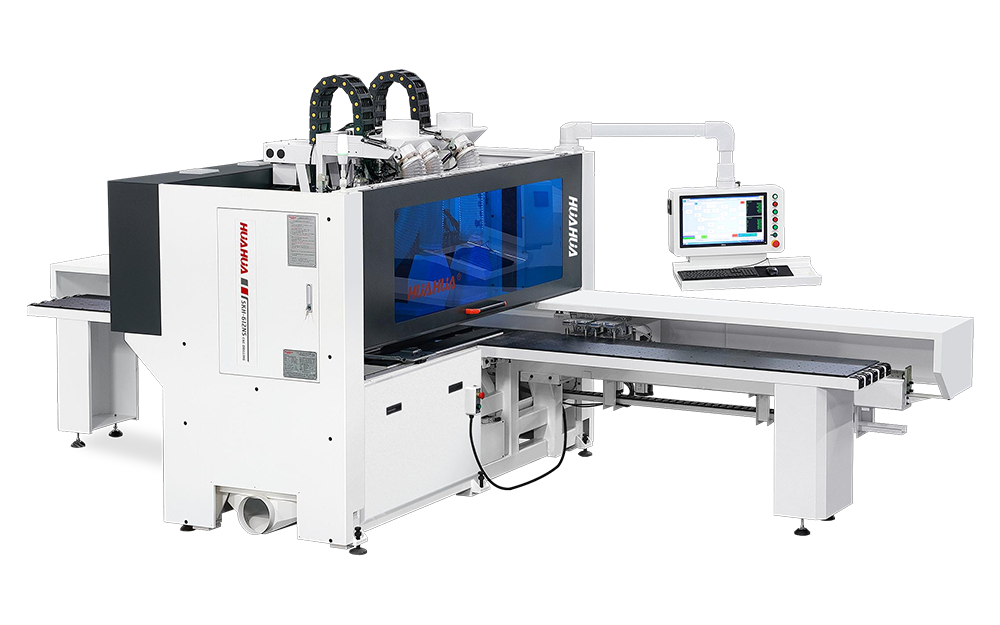
Understanding the Working Principles of Motion Systems
A CNC woodworking machine converts digital machining instructions into precise mechanical movement through its motion control system. The motor is responsible for driving each axis according to programmed coordinates while maintaining stable positioning throughout the machining process.
Stepper motors operate by moving in fixed incremental steps. Each electrical pulse commands the motor to rotate by a predetermined angle, allowing relatively straightforward position control without continuous feedback under normal operating conditions.
Servo motors function differently by using closed-loop control. Feedback devices continuously monitor motor position and speed, allowing the controller to compare actual movement with programmed commands and make corrections whenever necessary. This operating principle supports consistent motion under varying production conditions.
Understanding these differences provides the foundation for selecting an appropriate drive system.
Positioning Accuracy and Motion Stability
For manufacturers producing cabinet components, furniture panels, and decorative wood products, machining consistency directly affects downstream assembly and finishing operations.
When integrated into woodworking CNC machinery, servo motors continuously adjust movement based on feedback information. This enables the control system to maintain accurate positioning even when machine loads change during routing, drilling, or contour cutting operations.
Stepper motors can also provide satisfactory positioning performance when operating within their designed working range. However, because they generally do not verify actual position during movement, excessive load or unsuitable operating conditions may reduce positioning reliability if the application exceeds the motor’s practical capability.
Factories should therefore evaluate not only theoretical positioning accuracy but also stability during continuous production.
Performance Under Different Production Speeds
Production efficiency depends on maintaining smooth machine movement throughout the machining cycle rather than simply achieving maximum travel speed.
A CNC woodworking machine equipped with servo motors generally supports stable acceleration and deceleration across changing machining paths. Continuous speed adjustment allows complex tool movements to remain coordinated during processing of curved profiles, nested parts, and variable cutting trajectories.
Stepper motors typically perform effectively in applications involving moderate travel speeds and relatively stable operating conditions. As movement speed increases, available torque naturally decreases, making application matching an important consideration during equipment configuration.
Motor selection should therefore reflect actual production requirements instead of focusing exclusively on speed specifications.
Load Adaptability During Machining
Woodworking production involves varying cutting resistance depending on material type, cutter geometry, machining depth, and feed strategy. The drive system must respond appropriately as these conditions change.
With woodworking CNC machinery, servo motors automatically compensate for changing loads through continuous feedback control. The controller adjusts output according to actual operating conditions, helping maintain stable axis movement throughout different machining tasks.
Stepper motors generally operate according to predefined pulse commands without measuring real-time shaft position. Under suitable loading conditions, they provide dependable operation, but machine designers must carefully match motor capacity with expected production demands to maintain reliable performance.
Maintenance and Operational Considerations
Motor technology influences not only production capability but also long-term equipment management.
A CNC woodworking machine using servo motors typically includes more advanced control electronics and integrated feedback components. These systems provide diagnostic information that assists technicians in monitoring machine performance and identifying operating conditions during maintenance activities.
Stepper motor systems are comparatively simpler in structure, which may simplify certain aspects of installation and operation. Their straightforward control architecture continues to make them suitable for applications where production requirements remain relatively uncomplicated.
Manufacturers should evaluate maintenance strategy alongside production objectives when selecting machine configurations.
Matching Motor Technology to Factory Requirements
Every woodworking factory operates under different manufacturing conditions. Product diversity, daily production schedules, automation level, and future expansion plans all influence equipment selection.
For manufacturers producing customized furniture, complex cabinet components, or continuously changing product designs, woodworking CNC machinery equipped with servo drive systems often provides greater flexibility for demanding production environments where smooth motion control and process consistency are important.
Factories processing standardized products with relatively stable machining requirements may find that stepper motor configurations adequately support their production objectives while maintaining appropriate equipment investment levels.
Rather than assuming one technology replaces the other, manufacturers should assess how each motor system aligns with their actual operational priorities.
Evaluating Long-Term Manufacturing Value
Equipment investment should always be assessed over the entire production lifecycle instead of focusing only on purchase decisions. Motor performance affects production consistency, machine utilization, maintenance planning, and future equipment upgrades.
A CNC woodworking machine designed with appropriate motion technology should support both current manufacturing requirements and anticipated business development. Selecting a motor system that matches expected production complexity helps reduce unnecessary equipment modifications as production evolves.
We encourage customers to evaluate total manufacturing efficiency by considering machining quality, workflow stability, digital integration, operator requirements, and maintenance planning together rather than comparing motor technologies in isolation.
HUAHUA CNC Focuses on Practical Engineering Solutions
Choosing between servo and stepper motors is ultimately a matter of matching machine capability with production requirements. At HUAHUA CNC, we design woodworking manufacturing solutions by considering the complete production process, including machining accuracy, workflow efficiency, automation compatibility, and long-term operational stability.
Our equipment portfolio covers a wide range of woodworking applications for furniture, cabinet, and panel processing industries. We work closely with customers to recommend machine configurations based on manufacturing objectives instead of standardized equipment selections.
Through continuous engineering development and practical production experience, HUAHUA CNC remains committed to delivering reliable woodworking solutions that support efficient, stable, and sustainable manufacturing operations.