
Material selection directly affects edge finishing quality in furniture manufacturing. At HUAHUA CNC, we understand that MDF and plywood require different edge processing approaches because their structures, density, and surface characteristics are not the same. By combining suitable production methods with advanced equipment solutions, we help manufacturers achieve stable and consistent edge banding results.
MDF and Plywood Structure Differences Affect Edge Processing
MDF is made from compressed wood fibers, creating a relatively uniform internal structure. This consistency allows edge tape to bond evenly when the surface is properly prepared before processing.
Plywood consists of multiple layers of wood veneer arranged in different directions. Its layered structure provides strength and dimensional stability, but the exposed edge can show more texture differences compared with MDF.
During production, manufacturers need to consider these material characteristics when selecting edge banding methods. The correct edge banding equipment helps control adhesive application, pressing, trimming, and finishing processes for different board types.
Edge Banding Performance Comparison Between MDF and Plywood
MDF generally provides a smooth edge surface after cutting because of its fine fiber composition. This makes it suitable for applications requiring clean painted or laminated finishes.
Plywood edges may require more preparation because the visible layers can affect the final appearance. Proper pre-milling and surface treatment help create a more suitable bonding surface before applying edge tape.
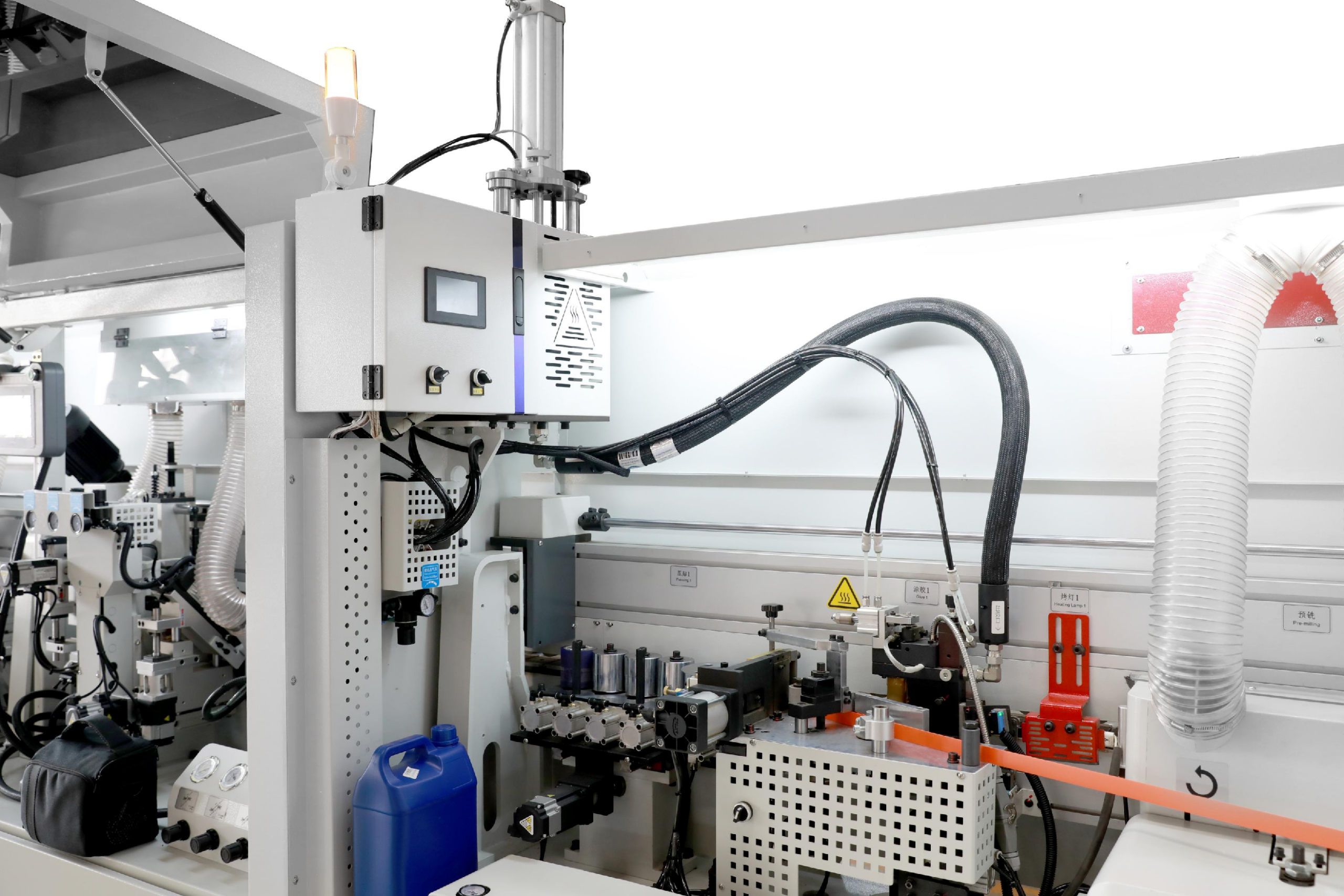
For both materials, processing accuracy directly influences the final result. A servo edge banding machine can improve panel positioning accuracy and maintain consistent processing performance when handling different board materials. The HUAHUA CNC HH-406RP uses servo positioning technology to improve panel alignment during edge banding operations.
Adhesion Requirements for Different Board Materials
The bonding performance of MDF and plywood depends on several factors, including edge preparation, adhesive selection, temperature control, and pressing stability.
MDF edges usually provide a more consistent bonding area because the fibers are evenly distributed. However, excessive moisture absorption or improper preparation may still influence adhesive performance.
Plywood requires careful control because its layered structure may create different absorption conditions across the edge. Stable glue application and pressure control are important for maintaining reliable adhesion.
The HH-406RP from HUAHUA CNC includes a glue system designed for continuous edge processing. Its clean-free glue pot design helps reduce frequent cleaning requirements during production, while the pressing system supports closer contact between edge tape and panel surfaces.
Surface Quality and Finishing Performance Analysis
MDF is often selected for furniture components where a smooth appearance is important. After edge banding, it can achieve a consistent visual effect when processed with suitable trimming and scraping functions.
Plywood is commonly chosen where strength and natural layered appearance are preferred. For exposed edges, manufacturers may need additional finishing steps to achieve the desired appearance.
The final edge quality depends not only on the board type but also on machine configuration. HUAHUA CNC designs edge processing solutions with functions such as pre-milling, fine trimming, scraping, and buffing to support different production requirements.
Selecting Suitable Edge Banding Equipment for Production Needs
Different furniture applications require different approaches to MDF and plywood processing. Cabinet manufacturers, custom furniture producers, and panel furniture factories should evaluate material types, production volume, and finishing standards before choosing machinery.
A suitable machine should provide stable conveying, accurate positioning, and flexible adjustment for different panel thicknesses. The HH-406RP supports panel thickness processing from 10mm to 60mm and tape thickness from 0.4mm to 3.0mm, allowing manufacturers to handle various edge banding applications.
For production lines handling multiple materials, automation can reduce manual adjustment requirements and improve processing consistency. Equipment with servo-controlled functions can help manufacturers maintain quality across repeated production tasks.
How HUAHUA CNC Supports Reliable Edge Processing
At HUAHUA CNC, we focus on developing woodworking machinery that meets the practical needs of modern furniture manufacturers. Our HH-406RP model integrates multiple edge processing functions, including pre-milling, servo positioning, trimming, scraping, and polishing solutions.
The machine uses a pre-milling system to prepare panel edges before edge tape application. This process helps remove surface irregularities and creates a cleaner bonding foundation for MDF and plywood processing.
We also pay attention to operational efficiency. The HH-406RP features a computer screen interface and a single-arm suspension design, helping operators manage machine settings more conveniently while optimizing workshop space usage.
Choosing the Right Edge Solution for MDF and Plywood
MDF and plywood each have different advantages in furniture manufacturing, and their edge banding performance depends on matching the right processing method. MDF offers a uniform surface for smooth finishing, while plywood provides structural strength with unique layered characteristics.
Manufacturers should evaluate their product requirements before selecting machinery. By understanding material differences and applying appropriate processing technology, factories can improve edge quality and production stability.
HUAHUA CNC continues to provide professional woodworking solutions for manufacturers seeking reliable and efficient production. With advanced models such as the HH-406RP, we help customers optimize edge processing workflows and achieve consistent results for different panel materials.