
Selecting woodworking equipment is a strategic decision that affects production efficiency, product quality, operating costs, and future manufacturing capability. As furniture and cabinet production becomes increasingly digital, manufacturers are no longer choosing machines based solely on cutting capacity.
Instead, they evaluate how equipment fits into complete production workflows. We work with customers to assess machining requirements, automation objectives, and long-term production planning so that every equipment investment supports sustainable business development.
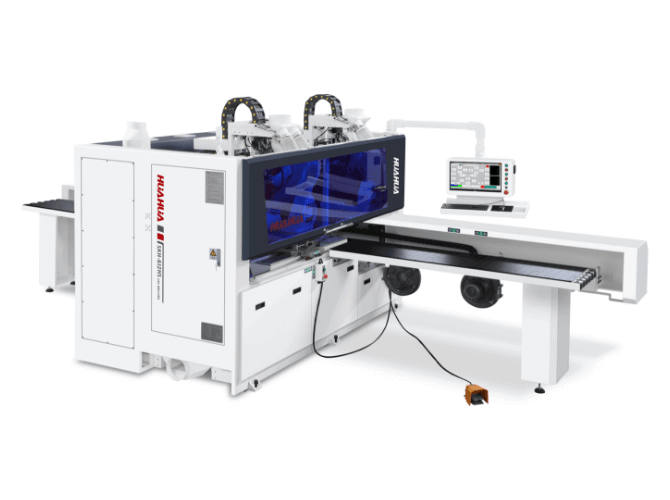
Define Production Requirements Before Choosing Equipment
Every CNC woodworking machine should be selected according to the products it is expected to manufacture. Cabinet factories, custom furniture producers, door manufacturers, and panel processing companies often require different machining capabilities, even when they process similar materials.
We recommend beginning with a detailed analysis of production requirements. Product dimensions, processing complexity, order variety, material types, and anticipated production volume all influence equipment selection. Purchasing a machine before defining these factors may lead to unnecessary investment or insufficient production capacity.
A clear understanding of manufacturing objectives also simplifies future production expansion because the equipment can be integrated into evolving workflows rather than becoming an isolated production asset.
Evaluate Machine Configuration Instead of Individual Components
When comparing woodworking CNC machinery, many buyers focus on individual specifications such as spindle power or travel speed. While these parameters are important, they should be evaluated as part of the complete machine system rather than independently.
Machine frame rigidity, transmission mechanisms, motion control systems, vacuum holding, lubrication design, electrical integration, and software compatibility work together to determine machining stability. Strong overall engineering often has a greater influence on long-term production performance than emphasizing a single specification.
We encourage customers to evaluate how every subsystem contributes to reliable daily operation instead of comparing isolated component lists.
Consider Automation Compatibility from the Beginning
Modern woodworking factories increasingly depend on automated production rather than standalone equipment. A CNC woodworking machine should therefore support integration with upstream and downstream manufacturing processes.
Automatic loading, unloading, labeling, drilling, edge banding, sorting, and production management software can all improve workflow continuity when equipment is designed for system integration. Even if complete automation is not implemented immediately, selecting equipment with expansion capability allows manufacturers to upgrade production gradually as business requirements develop.
Planning for future automation during equipment selection often reduces modification costs later.
Match Machine Capability with Product Diversity
Different production environments require different levels of machining flexibility. Woodworking CNC machinery used for standardized furniture production may prioritize continuous throughput, while equipment serving customized furniture manufacturers must efficiently process changing dimensions, profiles, and machining paths.
Factories producing highly customized products often benefit from flexible programming and rapid job change capability. Standardized production lines may instead emphasize stable repetition and optimized scheduling for large production batches.
Equipment selection should therefore reflect the balance between production flexibility and operational efficiency rather than assuming one configuration is suitable for every manufacturing model.
Assess Software and Digital Workflow Integration
The value of CNC equipment extends beyond mechanical performance. A CNC woodworking machine functions as part of a digital manufacturing system where production data moves continuously between design, programming, machining, and quality management.
Compatible software simplifies data transfer from CAD and production planning systems to machining operations. Digital workflows reduce manual programming, minimize data entry errors, and improve production traceability throughout manufacturing.
When evaluating equipment, we recommend reviewing software compatibility, programming flexibility, file management, and future system integration alongside mechanical specifications.
Prioritize Reliability Throughout the Equipment Lifecycle
Reliable production depends on stable machine performance over extended operating periods rather than achieving occasional peak output. Woodworking CNC machinery should be evaluated according to maintenance accessibility, spare parts availability, technical support, and operational consistency.
Preventive maintenance becomes more effective when machine systems are designed for routine inspection and service. Well-organized electrical layouts, standardized components, and practical engineering simplify maintenance while reducing production interruptions.
Long-term operating reliability often contributes more to manufacturing efficiency than short-term performance comparisons made during purchasing decisions.
Compare Total Manufacturing Value Instead of Initial Investment
Equipment purchasing decisions should consider the complete manufacturing lifecycle. A CNC woodworking machine influences labor organization, production scheduling, material utilization, machining consistency, maintenance planning, and future production expansion.
The lowest purchase price does not always represent the most suitable manufacturing solution. Likewise, selecting the highest specification without practical production requirements may increase investment without improving operational efficiency.
We encourage customers to compare equipment based on total manufacturing value, including workflow optimization, digital compatibility, operating stability, and expected business development over time.
Building Long-Term Manufacturing Success with HUAHUA CNC
Selecting woodworking equipment requires a comprehensive understanding of production objectives, technical requirements, and future manufacturing plans. At HUAHUA CNC, we focus on helping customers build practical production solutions by evaluating complete manufacturing processes rather than recommending equipment based solely on individual specifications.
HUAHUA CNC offers a full spectrum of woodworking manufacturing systems to serve furniture, cabinet and panel processing needs. Beyond robust engineering know‑how, our strengths extend to production workflow consultancy, supporting clients in achieving high‑efficiency equipment integration as well as sustainable factory progression.
We ground all solution design in three pillars: solid technical reliability, seamless digital compatibility and tangible manufacturing output. This focus allows us to equip manufacturers with woodworking systems for higher productivity, while laying solid groundwork to address the industry’s future demands.